
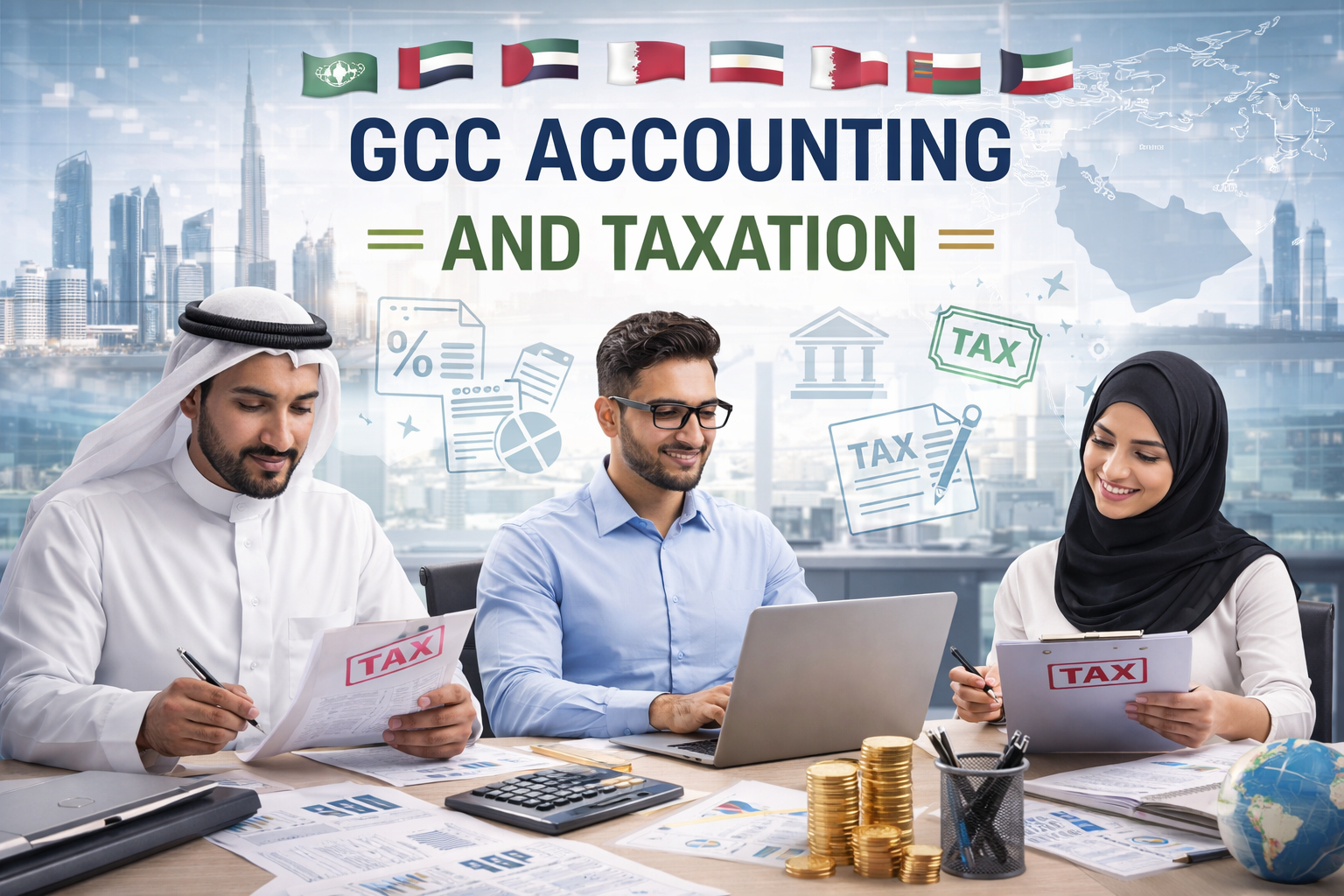
The GCC region has evolved into a regulated financial environment with VAT, corporate tax, and strict compliance requirements. For businesses operating here, accounting is no longer just about recording transactions—it is about ensuring accuracy, compliance, and strategic decision-making.
This raises an important question:
What does a complete accounting process look like in the GCC, from start to finish?
To operate efficiently, businesses must implement structured gcc accounting and taxation processes that cover everything from bookkeeping to final tax filing.
This guide explains the end-to-end accounting workflow in the GCC and how businesses can optimize each stage.
What Is an End-to-End Accounting Process?
An end-to-end accounting process covers the complete financial lifecycle of a business, including:
- Recording transactions
- Managing accounts
- Preparing financial statements
- Ensuring tax compliance
Each step is interconnected and essential for accurate financial reporting.
Step 1: Transaction Recording (Bookkeeping)
The process begins with recording daily financial transactions.
Key Activities:
- Sales and purchase entries
- Expense tracking
- Bank and credit card transactions
Importance:
Accurate bookkeeping ensures:
- Reliable financial data
- Smooth downstream processes
- Compliance with VAT regulations
Step 2: Accounts Payable and Receivable Management
Managing payables and receivables is critical for cash flow.
Accounts Payable:
- Vendor invoice processing
- Payment scheduling
- Expense categorization
Accounts Receivable:
- Customer invoicing
- Payment tracking
- Collection follow-ups
Impact:
Efficient management improves liquidity and reduces delays.
Step 3: Bank Reconciliation
Reconciliation ensures that accounting records match bank statements.
Key Tasks:
- Matching transactions
- Identifying discrepancies
- Correcting errors
Benefits:
- Detects fraud or errors
- Ensures data accuracy
- Supports audit readiness
Step 4: General Ledger Management
The general ledger (GL) is the core of the accounting system.
Includes:
- Categorization of transactions
- Maintaining account balances
- Tracking financial activities
Why It Matters:
A well-maintained GL ensures accurate financial reporting.
Step 5: Financial Statement Preparation
At this stage, businesses prepare key reports.
Core Financial Statements:
- Profit and Loss Statement
- Balance Sheet
- Cash Flow Statement
Purpose:
- Analyze financial performance
- Support decision-making
- Ensure compliance with standards
Step 6: VAT Calculation and Filing
VAT compliance is a major requirement in the GCC.
Key Activities:
- Calculate output VAT (sales)
- Track input VAT (purchases)
- File VAT returns
Challenges:
- Accurate classification of transactions
- Timely filing
- Avoiding penalties
Step 7: Corporate Tax Preparation
With corporate tax introduced in several GCC countries, businesses must:
- Calculate taxable income
- Apply deductions and exemptions
- Prepare tax returns
Impact:
Corporate tax directly affects profitability and financial planning.
Step 8: Audit and Compliance Checks
Regular audits ensure compliance with regulations.
Types of Audits:
- Internal audits
- External audits
- Tax authority reviews
Benefits:
- Identifies errors
- Ensures transparency
- Improves financial accuracy
Step 9: Reporting and Analysis
Financial data is analyzed to generate insights.
Key Metrics:
- Revenue growth
- Profit margins
- Cash flow trends
- Tax liabilities
Outcome:
Better decision-making and strategic planning.
Step 10: Final Tax Filing and Compliance
The final step involves submitting tax returns and ensuring compliance.
Includes:
- VAT return filing
- Corporate tax filing
- ESR reporting (if applicable)
Importance:
Timely and accurate filing avoids penalties and legal issues.
Real-World Example: End-to-End Accounting in Action
Consider a company operating in the UAE.
Before Structured Process:
- Disorganized bookkeeping
- Errors in VAT calculations
- Delayed financial reporting
After Implementing End-to-End System:
- Automated transaction recording
- Accurate VAT and tax filings
- Real-time financial insights
Result:
- Improved efficiency
- Reduced compliance risks
- Better financial control
Challenges in GCC Accounting Processes
Businesses often face:
- Complex tax regulations
- Frequent changes in compliance requirements
- Lack of skilled accounting professionals
- Manual processes leading to errors
These challenges highlight the need for structured systems.
Role of Technology in Accounting
Technology plays a key role in modern accounting.
Tools include:
- Cloud-based accounting software
- Automated reconciliation systems
- Real-time reporting dashboards
- Tax compliance tools
Benefits:
- Increased accuracy
- Faster processing
- Reduced manual effort
Best Practices for Efficient Accounting
To optimize the process, businesses should:
- Use automated accounting systems
- Maintain accurate documentation
- Perform regular reconciliations
- Monitor tax compliance
- Conduct periodic audits
Key Metrics to Track
To ensure efficiency, track:
- Transaction processing time
- Error rates
- Cash flow position
- Tax liabilities
- Reporting timelines
These metrics provide insights into financial performance.
Future Trends in GCC Accounting
The accounting landscape is evolving with:
- AI-driven automation
- Real-time financial reporting
- Digital tax filing systems
- Integrated financial platforms
Businesses adopting these trends will stay competitive.
Why Businesses Are Outsourcing GCC Accounting
Many companies are outsourcing because:
- Compliance requirements are complex
- Need for expert knowledge
- Cost efficiency
- Focus on core business activities
Conclusion: Build a Strong Accounting Foundation
An end-to-end accounting process is essential for operating successfully in the GCC.
By implementing structured gcc accounting and taxation practices, businesses can:
- Ensure compliance with regulations
- Improve financial accuracy
- Gain real-time insights
- Reduce operational risks
In 2026, a well-defined accounting process is not just a necessity—it is a competitive advantage for businesses operating in the GCC region.

 English
 Arabic
 French
 Spanish
 Portuguese
 Deutsch
 Turkish
 Italiano
 Russian
 Romaian
 Portuguese (Brazil)
 Tiếng Việt