
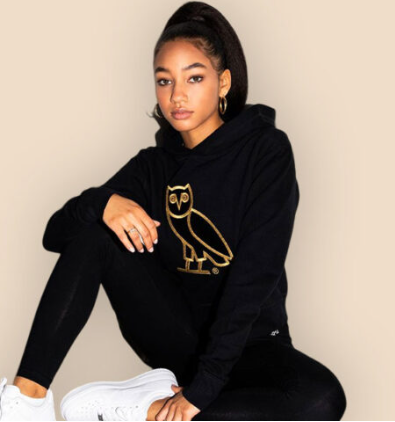
The hoodie has transcended its proletarian origins as mere gym wear or loungewear to become a dominant signifier in the lexicon of streetwear. We now witness a distinct bifurcation in this market, delineated by two formidable players: October’s Very Own (OVO) and White Fox Boutique. These brands do not merely sell garments; they vend a lifestyle, a particular posture towards the world. The current trend wave represents a fascinating dichotomy between the aspirational luxury of OVO, dripped in the iconography of Drake’s melancholic opulence, and the accessible, viral-dominated aesthetic of White Fox. To navigate this terrain is to understand how fabric, cut, and branding communicate tribal affiliations and personal identity in the digital age.
OVO’s Audacious Branding: The Golden Owl’s Gaze
When you don an OVO hoodie, you invite the scrutiny of the golden owl, a symbol that carries the gravitas of a cultural empire built on introspective rap and Raptors fandom. The brand eschews the loud, garish prints of yesteryear in favor of a minimalist yet unmistakable assertion of status; you pay a premium for the subtlety of the embroidery, the weight of the fleece, and the implicit understanding that you are part of a select fraternity. This is not passive clothing; the branding actively works to distinguish the wearer from the cacophonous masses. It whispers its pedigree where others shout, relying on the cognoscenti to recognize the heft and the meticulously stitched appliqué that separates a five-hundred-dollar garment from its fast-fashion counterparts.
The White Fox Silhouette: Embracing the Exaggerated Form
Conversely, White Fox Boutique capitalizes on the zeitgeist of the "off-duty model" look, a style predicated on the illusion of effortlessness achieved through aggressively oversized proportions. Their hoodies, often seen draping off the shoulders of influencers, reject the tailored fit in favor of a voluminous, cocoon-like silhouette that borders on the absurd. This deliberate shapelessness serves a dual purpose: it provides unparalleled physical comfort while simultaneously signaling a cultural comfort with one’s own visibility. The garment engulfs the frame, creating a stark juxtaposition between the bulk of the fabric and the often-slim physique of the wearer, a visual trick that dominates the algorithmic feeds of Instagram and TikTok with relentless efficacy.
Textile Tales: The Weight of Quality Versus the Softness of Hype
A tactile examination reveals the philosophical chasm between these two trendsetters. OVO prioritizes a structured, heavyweight fleece that feels almost armor-like, suggesting durability and a resistance to the ravages of the washing machine; it is a hoodie built to last, much like the legacy its founder seeks to cement. White Fox, however, optimizes for the initial sensory experience, utilizing a softer, thinner blend that feels like a well-worn teddy bear from the first wear. This pliability is integral to the "fit check" culture—the hoodie must slump and fold in a photogenic manner, draping languidly over the body without the stiff architecture required for longevity. It is a textile engineered for the screen, not necessarily for the decades.
The Color Palette: Melancholy Earth Tones Versus Viral Pastels
Diving into the chromatic choices of these brands reveals their targeted psychological impact. OVO frequently navigates a spectrum of muted earth tones—olive drabs, charcoal heathers, and deep navies—interspersed with stark monochromes that reflect the often overcast skies of Toronto and the introspective mood of its flagship artist. This palette whispers of sophistication and a grounded, almost stoic, sensibility. White Fox, in stark contrast, harnesses the dopamine hit of confectionary pastels: butter yellows, baby pinks, and powder blues that photograph brilliantly against the sterile white backdrops of influencer content. These colors are aggressive in their cheerfulness, designed to stop the scroll and inject a saccharine vibrancy into the digital space.
Styling the OVO: The Athleisure of the Aristocracy
To style an OVO hoodie is to engage in a delicate balancing act between high and low culture, often pairing the garment with tailored trousers or crisp, deadstock sneakers. The informed wearer understands that the hoodie functions as the anchor for a look that might include a luxury wool coat or a beanie from the same brand, creating a monochromatic ensemble that screams understated wealth. This is the uniform of the hip-hop aristocrat, a whitefoxus.com look that suggests you are comfortable enough to be casual but conscious enough to ensure every element, from the drawstring tips to the cuff ribbing, aligns with a precise aesthetic standard. It eschews logos for texture and cut, a true sartorial chameleon.
Mastering the White Fox Vortex: Volume and Proportion
Successfully integrating a White Fox hoodie into your wardrobe requires an embrace of the "pumpum" shorts phenomenon or the invisible pants illusion, where the oversized top dominates the entire frame. Stylists and influencers manipulate this proportion by pairing the voluminous hoodie with micro-mini skirts or bike shorts, creating a visual tension where the garment itself becomes the focal point, obscuring the body beneath. This styling trick emphasizes vulnerability and youth, a playful exposure that contrasts sharply with the OVO method of coverage. It is a look that demands confidence in one’s silhouette, allowing the fabric to dictate the terms of engagement with the observer.
The Economic Paradox: Investment Pieces Versus Disposable Trends
The fiscal strategy behind these purchases delineates the consumer base with surgical precision. An OVO hoodie represents an investment, a ticket priced at a premium that grants access to a rarefied world of pop-up shops and limited drops; its resale value often holds, creating a secondary market of its own. White Fox, however, operates on the principle of rapid obsolescence, offering a lower price point that encourages multiple purchases across various colorways, feeding the beast of constant content creation. This economic model accepts—even encourages—the ephemeral nature of trends, allowing the wearer to cycle through aesthetics with the seasons, discarding last month’s viral sensation for today’s algorithmic darling.
Cultural Cachet: From the 6ix to the Worldwide Web
The provenance of these hoodies imbues them with distinct cultural capital. OVO draws its power from the specific geography of Toronto—the "6ix"—and the global reach of Drake’s musical narrative, creating a localized luxury that resonates worldwide. It is a flag planted for a city and a sound. White Fox, hailing from Australia, leverages the power of the influencer mafia, a network of interconnected personalities who transform the garment into a must-have item through sheer repetition. The cachet here is not geographical but digital; it is the culture of the "unboxing," the "try-on haul," and the fleeting moment of Instagram fame, a currency far more volatile than gold.

 English
 Arabic
 French
 Spanish
 Portuguese
 Turkish
 Dutch
Dutch
 Italiano
 Russian
 Romaian
 Portuguese (Brazil)
 Tiếng Việt